Thinking about buying a franchise? Learn the 5 things to check first, from FDD Items 7, 19 and 20 to territory and validation, plus free advisory help.


When buying a franchise, the stakes are real. Choose the wrong brand, and it’s not something you can just quickly return and get your money back.
“This is the biggest decision that these clients will ever make,” said Tyler Altenhofen, co-founder of Franchise Sidekick. “And it’s their life’s savings.”
The good news is that you don’t need an MBA to make a smart decision. You need to know what to look for, what to ask and who’s in your corner. This guide covers the five things every future franchise owner should evaluate, so you can buy a business with confidence instead of crossed fingers.
Key takeaways
- The Franchise Disclosure Document is your roadmap. Start with Item 7 (what it costs), Item 19 (financial performance) and Item 20 (unit growth and turnover).
- You get at least 14 calendar days with the FDD before you can sign or pay anything. Use every one of them.
- Leadership matters as much as the concept. Look for an experienced team that listens to franchisees.
- Territory can make or break profitability. Know how it’s defined, what’s protected and when minimum royalties begin.
- Validation calls with current and former franchisees are one of the most useful parts of your research.
- A clear unique selling proposition helps a brand stand out from competitors.
- Start with self-guided research in SeeThrough, then use Franchise Sidekick’s free advisory services to pressure-test your shortlist.
What should you look for when buying a franchise?
When you buy a franchise, evaluate five things:
- The Franchise Disclosure Document, especially Items 7, 19 and 20
- The experience and track record of the franchisor’s leadership team
- How territories are defined and which ones are still available
- Evidence from current and former owners through validation calls
- The brand’s unique selling proposition
Why does franchise due diligence matter more than ever right now?
According to the International Franchise Association’s 2026 Franchising Economic Outlook, franchise establishments are projected to rise 1.5% in 2026, from roughly 832,500 to 845,000 units, while total franchise output climbs about 1.6% to $921.4 billion.
More franchise brands means more choice and more ways to choose wrong. Many buyers also go in underprepared. A 2023 GAO report found that franchise owners in eight of nine discussion groups, they generally didn’t know the FTC’s consumer guide to buying a franchise existed.
Our team is here to change this. We want to educate you through content and advisory services, so when you make the decision to buy a franchise – or not – it’s made with confidence.
Let’s start with the top five things you should start with when buying a franchise.
1. Read the FDD like a pro
An FDD is a legal document that describes the business opportunity, but it often runs a few hundred pages across 23 required items, much of it in dense legal language. Under the FTC Franchise Rule, you do get at least 14 calendar days to review before you pay anything or sign a binding agreement, but it’s still a lot to process.
You don’t have to read it alone, and we strongly recommend you don’t. A franchise advisor can walk you through the process and connect you with a trusted franchise attorney to review the FDD and franchise agreement. Make sure you understand, and are comfortable with, every item.
When you’re comparing franchise investments, start with these three items:
|
FDD Item |
What it tells you |
Questions to ask |
|
Item 7 |
Estimated initial investment |
What’s the total cost to open, including working capital? |
|
Item 19 |
Financial performance representations |
Does the brand share revenue and expenses? How many units are included? |
|
Item 20 |
Outlet and franchisee information |
Is the system growing? How many units closed, transferred or were terminated? |
Item 7: What does it cost to buy a franchise?
Item 7 lists your estimated initial investment: the franchise fee, build-out, equipment, opening inventory and the “additional funds” (working capital) you’ll need to get through the early months. Read it alongside Item 6, which covers ongoing fees such as royalties and marketing contributions.
Treat Item 7 as a starting point and build in a cushion.
Item 19: Financial performance representations
Item 19 is where a franchisor can share how its units actually perform, which shows how existing units have performed. Past results don't guarantee yours. It’s optional, and franchisors and franchise sellers generally can't make financial performance representations that aren't in Item 19. If a salesperson quotes earnings numbers that aren’t in Item 19, treat that as a red flag.
Item 20: Outlets and franchisee information
Item 20 gives a three-year history of openings, transfers, terminations, non-renewals and closures. It’s one of the clearest signals of a system’s health. A brand that’s opening units faster than it’s losing them is usually a good sign. A pattern of terminations or closures deserves hard questions.
The numbers tell you what happened. The people behind the brand tell you why, which brings us to leadership.
2. Evaluate the franchise brand’s leadership team
Everyone loves a good founder’s story, and not just because of the emotional connection it creates with customers. An exceptional founder and corporate team can help drive franchisee success because they build the systems, training and support you’ll rely on every day of owning a business.
Start in the FDD. Item 2 lists the business experience of the franchisor’s key executives, and Items 3 and 4 disclose litigation and bankruptcy history.
Then ask:
- Who is leading the vision of the company?
- How much industry experience does the leadership team have?
- What teams support franchisees (training, marketing, operations, technology)?
- Are they passionate about both the business and franchisee success?
- Does the franchisor listen to franchisee feedback and act on it?
- Is this someone you’ll enjoy working with for the next 10 years?
“It’s a partnership with the founder, not just a cool brand,” said Anthony Hudson, executive franchise advisor at Sidekick.
Great leadership tends to build a strong system. Where you plug into that system matters just as much.
3. Understand territory definition and availability
Finding the right franchise is about more than buying into a successful concept. Territory quality can significantly affect your performance as a franchise owner.
Many mature, big-name franchise brands come with high fees and limited availability, which can leave newer buyers choosing from leftover territories. You want to make sure good territories are still open and keep future growth in mind, too.
Every franchisor defines territory differently, and Item 12 of the FDD spells out the rules. Some offer no protected territory at all, some have mapped the entire country and a few will work with you to define a custom territory. Service and retail franchisors usually map territories differently:
- Service: Territories may be defined by a minimum number of eligible customers, such as businesses, rooftops or residents.
- Retail: Territories may be defined by square miles, intersections, driving distance or similar boundaries.
Territory issues can surface late in the process, which is why it helps to have someone in your corner. One Sidekick Advisor recently helped a client in a smaller Texas market work through their FDD review, validation calls and available capital. They eventually considered three territories and settled on two after reviewing the questions below.
Then before you commit, ask yourself:
- How many territories can I afford to buy and properly develop?
- What do Item 19 (if provided) and validation calls tell me about unit performance, and how many territories fit my goals and budget?
- How close do I want to live to my territory?
- Is someone else likely to buy this territory if I wait? How would that affect my plans?
- If I buy multiple territories, what’s my required timeline to open each one?
- When do minimum royalties begin?
- Do I have the resources to staff and serve every area I buy?
Territory tells you where you’ll operate. Talking to current franchise owners tells you what it’s actually like.
4. Validate franchisee success
What better way to understand how a franchise performs than talking directly to the people running one? Validation is one of the most important steps in buying a business because it gives you an honest inside look at franchise ownership.
Item 20 includes contact information for current franchisees and those who’ve left the system in the most recent fiscal year.
Call both and ask questions like:
- Has the business met your expectations, financially and personally?
- How long did it take to reach break-even?
- Do you feel supported by the franchisor?
- What would you like to see the leadership team do differently?
- What’s your biggest challenge in the business?
- If you could go back, would you join this franchise again?
Validation calls are beneficial becase franchisees usually have no stake in your decision. It’s a good idea to call a broad mix, including former owners. Unhappy owners aren’t afraid to tell it like it is, and thriving ones will help confirm your decision.
5. Look for unique selling propositions
Buying a franchise in an industry you love doesn’t guarantee a strong return on your investment. Even if a brand sounds brilliant or sits in an industry you know well, make sure it has its own unique selling propositions. What does it offer customers that other franchise brands don’t?
A USP doesn’t have to be a one-of-a-kind product. Many brands, especially in home services, stand out with things like:
- Exceptional customer service
- Strong, recognizable branding
- An estimated customer acquisition model
- First-to-market positioning
- Technology-driven operations
- A great culture with happy employees
The brand that catches your eye first isn’t always the best fit. At Sidekick, many of our clients end up investing in a different brand than the one they first asked about, once they compare options against their goals.
Ready to begin your franchise journey?
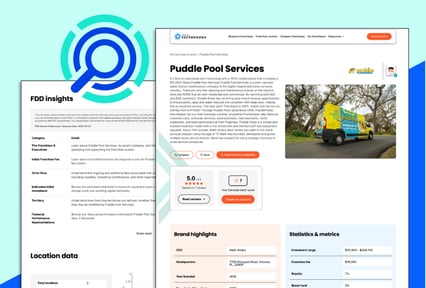
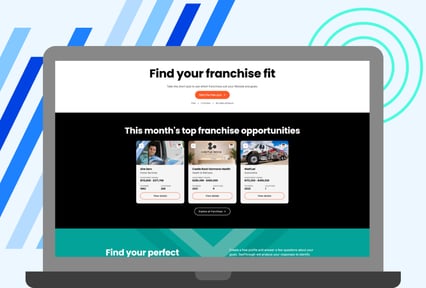
Start with Sidekick SeeThrough is our free, self-guided franchise research platform. You can explore FDD data on more than 3,300 U.S. franchise brands, read real franchisee reviews and take the Franchise Fit survey to see which concepts match your goals, budget and lifestyle.
Use SeeThrough to build your shortlist at your own pace. When you’re ready, bring it to an advisor and pressure-test it together.
How does Sidekick help you reduce risk?
The FDD, leadership, territory, validation and USP each tell you part of the story. A great advisor helps you put the whole picture together. That’s what our team is built for. Our mission is to be the most effective way to reduce risk when buying a franchise.
Here’s how we do it:
- Free advisory services. Like a real estate agent, our services are free to you; Franchisors pay our fees.
- No steering. Our fees are identical across the brands in our inventory, so our advisors don’t earn more by pushing you toward a particular one.
- Vetted franchise brands. We work only with brands that meet our standards, certify those with proven track records and evaluate each brand against defined criteria.
- Full-time advisors. Our advisors are dedicated to helping you define your goals, explore options, review the FDD, navigate territory and financing and connect with franchise attorneys.
- Honest guidance. We’ll tell you if a deal isn’t right for you, even if that means walking away.
Whether you’re leaving your 9-to-5, building a side business or growing a portfolio, we’ll help you find a franchise that fits your lifestyle, financial commitments and goals. Schedule a free, 10-minute call with an advisor today to get started.
Frequently asked questions about buying a franchise
What is a Franchise Disclosure Document?
An FDD is a legal disclosure that franchisors must give prospective buyers under the FTC Franchise Rule. It contains 23 items covering costs, fees, financial performance, territory, litigation, leadership and unit history. You must receive it at least 14 calendar days before you sign an agreement or pay any money. Some states add their own disclosure requirements.
What does it cost to buy a franchise?
It depends on the brand and business model. Item 7 of the FDD lists the estimated initial investment, including the franchise fee, build-out, equipment, inventory and working capital. Home-based and service franchises are often the most affordable, while restaurants and large-footprint concepts can require significantly more. You also want to budget for ongoing royalties and marketing fees, listed in Item 6.
Is Item 19 required in an FDD?
No. Item 19 financial performance representations are optional. If a franchisor doesn’t include one, franchisors and franchise sellers generally can't make financial performance representations outside Item 19, verbally or in writing. A missing Item 19 isn’t automatically a deal-breaker, but it’s worth asking why.
What is franchise validation?
Validation is the process of talking with current and former franchisees, whose contact information appears in Item 20 of the FDD. It’s how you find out whether the franchisor’s support, training and unit economics live up to the sales pitch.
Do I need a lawyer to buy a franchise?
It’s strongly recommended. A franchise attorney can review the FDD and franchise agreement, flag unfavorable terms and explain your obligations, including any personal guarantee. Sidekick Advisors can connect you with trusted franchise attorneys.
How do I buy a franchise if I’ve never owned a business?
Many successful franchise owners are first-time business owners. Franchising gives you a proven system, training and support. Start by defining your goals and budget, research brands in a tool like SeeThrough, review FDDs carefully and work with a franchise advisor who can guide you through each step.
How long does it take to buy a franchise?
It varies, but most buyers take a few months to research brands, review FDDs, complete validation, secure financing and attend a discovery or confirmation day. The FTC’s 14-day FDD review period is the legal minimum, not a target.
Are Franchise Sidekick’s services really free?
Yes. Sidekick’s advisory services are free to you. Franchisors pay our fees, and those fees are identical across the brands in our inventory, so our advisors stay focused on your best fit.
Disclaimer: This article is for educational purposes and isn't legal or financial advice. Franchise Sidekick doesn't make earnings claims; results vary by owner, market and brand.