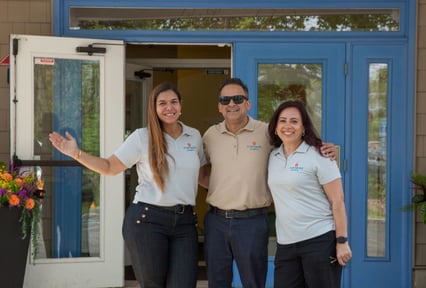
Discover how empty nesters are turning this new chapter into a family-owned franchise business with their adult children.


There's a moment that catches a lot of parents off guard. The last kid moves out, the house gets quiet, and you realize – maybe for the first time in decades – that your time is actually yours again.
It's exciting. It's a little disorienting. And for a growing number of empty nesters, it's the moment that sparks a question worth taking seriously: “What now?”
This is exactly the conversation happening more and more at Franchise Sidekick. Parents in their late 40s and 50s who aren't ready to coast toward retirement are seeing franchising as the smartest path to owning a business without starting from scratch.
Some are doing it alone. Many are teaming up with their kids. And almost all of them say “I wish I had looked into this sooner.”
This guide is for anyone standing at that crossroads, ready for the next chapter, but not sure what it looks like yet. Let’s dive in.
Key takeaways
- The average American becomes an empty nester between 48 and 50 with decades of working years, financial stability and drive still ahead of them.
- Franchising offers a proven business model with built-in support, making it one of the lowest-risk paths to business ownership for people who don't want to start from scratch.
- Parent and adult child franchise partnerships combine financial experience with youthful energy, and advisors say it's one of the most powerful ownership combinations they see.
- Service-based industries like home services, wellness and senior care are among the best fits for family ownership teams.
- Before going into business with family, roles, responsibilities, exit plans and expectations need to be defined clearly and early.
- Franchise Sidekick helps families find the right franchise match for their goals, lifestyle and financial situation with zero-pressure guidance every step of the way.
When the last kid leaves, something unexpected happens
For years, your schedule revolved around someone else's. School drop-offs, game days, late-night homework sessions, college move-ins.
And then, one day, it stops.
The house is quiet. The calendar clears. And you're left with what a lot of parents describe as the strangest mix of pride, loss and a question you weren't entirely ready for: “What do I do now?”
Nationally, the average age at which Americans become empty nesters is around 48 to 50 years old. That means millions of people hit this milestone with many productive years still ahead of them. They're not ready to retire. They're not ready to slow down. And they’re ready for something new.
More and more of those people are turning that restlessness into something real. They're buying franchises and many are doing it alongside their adult children.
Why franchising? Because starting from scratch is overrated
What does it take to build a business from the ground up?
You're creating the brand, developing the systems, figuring out the product, finding the customers and hoping it all works, usually while burning through savings and working more hours than you ever did at your 9-to-5.
Franchising is a different path entirely. When you become a franchise owner, you're buying into a proven model. The systems are built. The brand is established. There's training, support and a network of other owners who've already figured out what works.
According to the International Franchise Association, franchised businesses are projected to reach approximately 845,000 establishments in 2026, employ nearly 8.9 million workers and generate more than $920 billion in economic output. This makes franchising one of the most significant contributors to the U.S. economy. That kind of momentum doesn't happen by accident. It happens because the franchise model works.
For empty nesters with financial stability, professional experience and time to invest, franchising is a smart, calculated next step.
"Some people reach a point where they finally have flexibility to focus on themselves again, but they're not ready to fully slow down," said Michael Scheerer, franchise advisor at Franchise Sidekick. "They still want purpose, growth and ownership without the risk of starting completely from scratch. Franchising gives them a proven model and support system while still allowing them to build something meaningful and potentially create something great for their family."
That word family is what makes this topic really interesting.
Making it a family business changes everything
So, what if empty nesters ask their adult children to join them?
Think about where your son or daughter is right now. Maybe they're a few years into their career, smart and driven, but feeling constrained by working for someone else. Maybe they're entrepreneurial but don't have the capital or connections to go it alone. Maybe they've mentioned, once or twice, that they'd love to build something of their own.
And then there's you with the financial foundation, the leadership experience and the business wisdom that only comes from decades in the workforce.
Put those two things together, and you've got something powerful.
"I like to think of it like a perfect combination of experience and energy," Michael said. "Parents often bring leadership, financial stability and business experience, while adult children bring adaptability, an understanding of technology and day-to-day drive. When all of that comes together, it can be a pretty beneficial partnership."
This isn't just anecdotal. According to the Family Owned Business Institute, family-owned businesses represent about 90% of all businesses in the United States, generating 64% of U.S. GDP and employing 62% of the workforce. Family businesses are the backbone of the American economy. And when structured well, with clear roles and aligned goals, they can be deeply rewarding in ways that go far beyond the financial.
What does a parent-child franchise partnership actually look like?
One of the most common misconceptions about going into business with family is that everyone has to do everything together. In reality, the best family franchise partnerships work because the work is divided clearly.
"Service-based businesses, wellness concepts, home services, senior care, just to name a few, can work well because they allow responsibilities to be divided naturally," Michael said. "One person can focus on strategy and oversight while the other handles operations, marketing or growth."
That might mean the parents handle the financial oversight, investor relationships and long-term strategy while their adult children manage the day-to-day tasks like staffing, customer experience and marketing execution. Each person plays to their strengths and no one is stretched too thin.
Franchises are an especially strong fit because the business model itself provides a structure that families can grow into. And you're following proven workflows, too. That built-in support system is particularly valuable for family teams that are learning business ownership together.
The conversations you need to have before you write a check
The families who thrive as franchise owners have both enthusiasm and clarity. And that clarity comes from having honest, sometimes uncomfortable, conversations before any contracts are signed.
"I always recommend they be very clear upfront about roles, expectations, decision-making and long-term goals," Michael said. "One of the biggest mistakes is assuming everyone has the same vision for the business."
Here are the conversations that matter most:
Who's in charge of what?
Define roles before day one. Who oversees finances? Who manages staff? What decisions require both of you, and what can be made independently? Ambiguity is expensive.
What does success look like and on whose timeline?
A parent nearing retirement may want a business that generates steady income and can eventually be handed off. An adult child may want to scale aggressively. Neither vision is wrong, but misaligned expectations can derail even the strongest partnerships.
What happens if things change?
Life happens. People get sick. Relationships shift. Circumstances evolve. A pre-agreed exit plan is professional and beneficial for everyone involved.
"I also think families should discuss exit plans and accountability early, before emotions become tied to the business," Michael said.
This might feel like a lot before you've even looked at franchise brands, but it's exactly what separates family businesses that thrive from those that struggle. According to data from the Family Firm Institute, only about 30% of family businesses make it to the second generation and just 12% survive to the third.
The families who beat those odds are the ones who treat the business like a business, not just an extension of the family dinner table.
The pattern of success: What it actually looks like
So, what does it look like when this works? When a parent and adult child buy a franchise together and build something that lasts?
Michael has seen it enough times to recognize the pattern.
"The strongest pattern I see is families who treat the business professionally while still using it as a way to create shared purpose and opportunity."
They show up with both the personal and the professional. They have the hard conversations early and revisit them often. They respect each other's roles. And over time, what started as a business venture becomes something bigger. A legacy asset that creates financial security for multiple generations.
The opportunity is both financial and relational. For families that felt the distance of their kids building their own adult lives, co-owning a business can create a new kind of connection, one built around a shared mission, shared wins, and yes, the occasional shared frustration that makes the wins even sweeter.
How Franchise Sidekick helps families get it right
Owning a business with your family is one of the most meaningful things you can do. It's also one of the most important decisions you'll ever make, and the right guidance makes all the difference.
If you're not quite ready to talk to someone but want to start exploring on your own terms, Sidekick SeeThrough is the place to start. It's Franchise Sidekick's self-serve research platform built around real franchisee reviews and transparent brand data, so you can dig into franchise brands honestly, without any pressure.
When you're ready to take the next step, a Sidekick Advisor will get to know your goals, financial situation, lifestyle and what you're hoping to build before carefully matching you with brands.
For families going into business together, that process includes thinking through partnership structure, industries that fit both generations' strengths and the investment level that makes sense for your specific picture. And because it's completely free to buyers, you can explore with confidence.
The nest may be empty. But the next chapter? It could be your best one yet.
Frequently asked questions for empty nesters
What is the best franchise to buy as an empty nester?
The best franchise for an empty nester depends on your lifestyle, financial goals and the level of involvement you want. Service-based businesses, home services, wellness franchises and senior care are popular categories for this life stage because they allow flexible scheduling and can be structured to divide responsibilities between parents and adult children co-owners.
Can I buy a franchise with my adult child?
Yes, and it's more common than you might think. Family franchise partnerships are a natural fit because each person brings complementary strengths. Parents often contribute financial stability and business experience, while their adult children bring energy, adaptability and an instinct for technology and operations. The key is defining roles and expectations clearly from the start.
Is franchising a good investment for people approaching retirement?
Franchising can be a strong path to building income and equity during the years leading up to retirement and potentially a transferable asset to pass on to the next generation. The proven business model, training, and built-in support reduce the risk compared to building a business from scratch.
How much does it cost to buy a franchise?
Franchise investment costs vary widely by industry, brand and business model, from under $100,000 for some home-based or service concepts to well over $500,000 for established brick-and-mortar brands. An advisor from Franchise Sidekick can help you understand what's realistic for your financial situation and identify brands that match.
What is a franchise disclosure document and why does it matter?
The franchise disclosure document, or FDD, is a legal document that every franchisor must provide to prospective buyers before any agreement is signed. It contains 23 items of critical information about the franchise, including fees, financial performance, franchisee obligations and the brand's litigation history. Items 7, 19 and 20 are especially important for evaluating the true cost and earning potential of a franchise.
What are the biggest risks of going into business with family?
The most common pitfalls include unclear roles, misaligned expectations and a reluctance to have difficult conversations. The families that succeed tend to address these issues head-on before investing, agreeing on decision-making structures, accountability expectations and even exit plans. A Franchise Sidekick Advisor can help facilitate these conversations as part of the discovery process.
How does Franchise Sidekick work for prospective franchise buyers?
Franchise Sidekick offers a free, advisor-led process that matches prospective buyers with the right franchise for their goals, lifestyle and financial situation. Advisors guide buyers through every step, from initial exploration and FDD review to validation calls with current franchisees. There's no cost to the buyer and no pressure to move forward until you're confident.