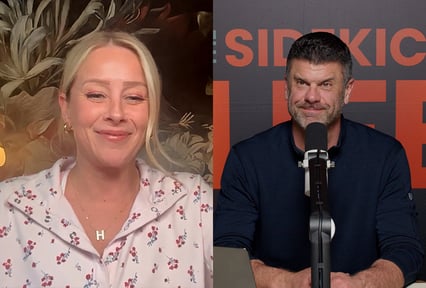
LinkedIn coach and NYT best-selling ghostwriter Holly Joyner breaks down the systems, structure and daily habits that turn LinkedIn into a marketing engine.

Most entrepreneurs don't avoid LinkedIn because they're too busy. They avoid it because they're scared.
Holly Joyner would know. Before she became a New York Times best-selling ghostwriter, founder of The Story Spark and one of the most-followed LinkedIn coaches out there, she was a single mom of three girls with an English degree, no marketing background, no social media presence and a staff writing job that had just asked her to do more work for less money. She came to LinkedIn in 2021 out of pure desperation.
Then she quit. She came back in 2022. And she quit again.
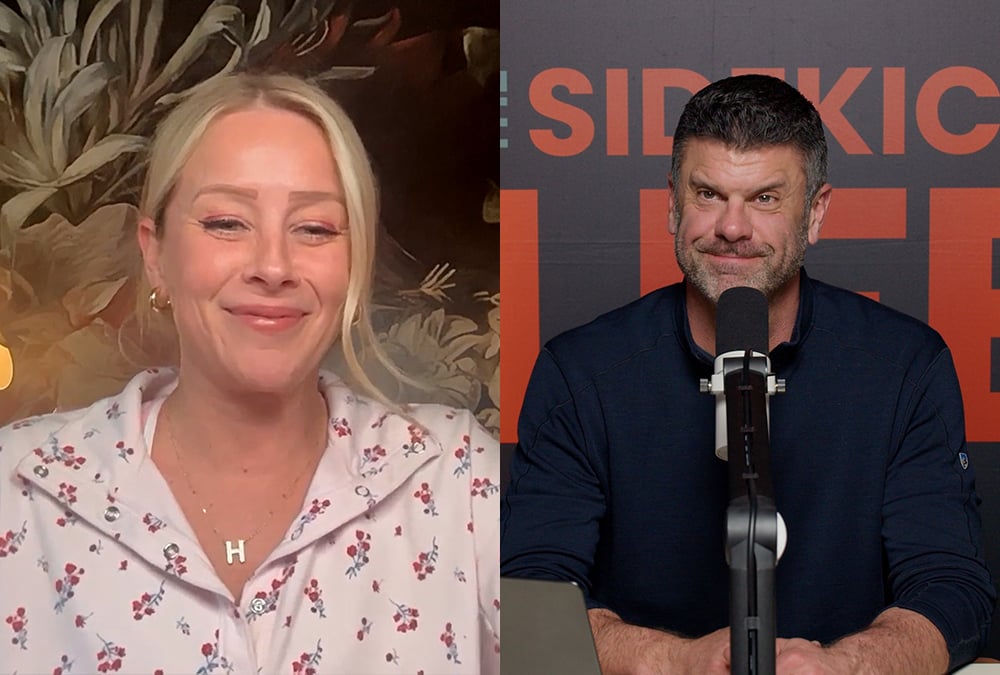
What happened on the third try is the reason she's on this episode of "The Sidekick Life." Holly sat down with Ryan, a past client of hers, to break down exactly how a small business owner with no team, no budget and no interest in self-promotion can turn LinkedIn into a marketing engine that compounds.
Key takeaways
- LinkedIn is the highest-leverage free marketing channel for B2B and under 1% of users are posting.
- The number one barrier to showing up isn't time or skill, it's fear wearing a costume.
- Start with comments, not posts. There's no excuse not to comment.
- Stay out of your feed. Work from profiles and search instead.
- Two posts a week, Tuesday and Thursday, is the minimum for algorithmic consistency.
- Build an engagement system where every minute has an assignment.
- Use AI as an idea generator or editor, never as the writer.
Failing twice before it finally worked
Holly had spent nearly 20 years ghostwriting books when she realized something uncomfortable about her career: she didn't own any of it.
"If my agent walked or the leads for my agent dried up, I had no lever to pull," Holly said.
No say in her income, her schedule or the longevity of her own career.
"The first thing that led me to LinkedIn was desperation," Holly said.
Then came 2020 and the ultimatum from her staff writing job. She was turning 40 with three kids at home, and she decided it was time to bet on herself. What followed was two years of burnout with no ROI to show for it. By 2023, she came back with a different mindset entirely.
"The question I asked myself was, why not me?" Holly said. "If I can create a set of systems and I can make this part of my daily business engine, then why not me?"
Since then she's replaced her previous income, been found by a new literary agent through the platform and built a client roster she isn't actively recruiting for. And she's quick to draw one important line for business owners who worry this becomes a second job.
"My job is not LinkedIn," Holly said. "LinkedIn is my marketing engine."
Why LinkedIn is the best free lever you're not pulling
The way brands get built and marketing actually works now lends itself to LinkedIn, particularly in B2B. Holly points to third-party data putting it around 77% more effective than other social platforms, and she's careful to note she gets nothing for saying so.
With roughly a billion users on the platform, under 1% are actually posting. Meanwhile, an enormous number of people are logging on and reading every day.
"There's many, many, many fish in the sea for the few fishermen who are casting a line," Holly said.
Her read on the market? It isn't saturated yet, it isn't too late, and there's still an upswing to ride. Especially for an entrepreneur without a marketing budget, it's free access into the daily lives of the exact people you're trying to reach.
The real barrier isn't the algorithm, it's fear
So, if the opportunity is that good, why is 99% of the platform silent?
"The number one barrier is fear," Holly said. "And that fear doesn't always feel like fear to the owner of it."
Sometimes it shows up as ego. Sometimes it's the virtue-signaling thing we all do where we announce how much we hate social media. Sometimes it's the fear of sounding like a self-promoting jerk or of being seen trying.
"People are often suspicious of things that they don't understand or they're not willing to do themselves," Holly said.
Step one: your differentiators, then your comments
The first conversation Holly has with clients is about what makes them different from everyone else in their industry, personally and as a business. Those differentiators are what all your storytelling gets built on, not just on LinkedIn. Right behind that comes your origin story, the journey from where you were to where you are now. Holly has told hers a hundred times, on purpose.
Then the profile basics: one clear headshot, a banner (Canva has plenty of decent free ones if you're not ready to spend money yet), and a featured section that links somewhere useful.
And then, controversially, she tells people not to post.
"There's no excuse not to comment," Holly said. “Telling a nervous business owner to start by posting gets you 35 excuses. Commenting gets you started.”
She pairs it with one more piece of advice she's giving more and more often.
"Stay out of your feed," Holly said.
The feed is what frustrates people, grosses them out and ultimately talks them out of participating. Instead, use the search bar. Visit the profiles of people you know, people in your industry and people in adjacent industries where you share an audience. Better yet, find one or two established voices in your space and shop their comment sections. The people commenting there are almost always your people.
Two posts a week and the golden hour
When you’re ready to start posting, Holly's prescription is Tuesday and Thursday, the strongest days by the data and the bare minimum for the LinkedIn algorithm to treat you as a consistent contributor. That matters because LinkedIn decides who sees your content, and the more algorithmic value you build, the wider your reach gets pushed.
Your first post does not need to be a grand introduction. It can be about your first day of kindergarten. Readers don't require continuity across your story, they just want something helpful, encouraging or inspiring. Holly recommends starting with light educational and value-add posts, the solid singles and doubles, before you swing at your origin story or your business philosophy.
Leveling up from there means building an engagement system. Comments, DMs, connection requests, profile visits, likes: every action teaches the algorithm something about who you want to be in front of. Holly's own system covers how she comments, who she connects with and why, the message she sends on connection and which profiles she visits daily.
She built it around the golden hour, the first 60 minutes after your post goes live, when your ability to push reach is highest. For years she posted at 8 a.m. and worked LinkedIn from 8 to 9, bell to bell, Monday through Friday.
"Every minute has an assignment," Holly said.
Thirty minutes works too, if that's what you've got. What matters is that you log off having invested in your business instead of feeling burned out and overwhelmed. Then you click the X and go do your actual work. These days Holly's down to 20 to 30 minutes a day, with returns exponential to the investment.
The six assets of a post that actually gets read
Holly teaches a six-part structure, and the spacing is every bit as intentional as the words.
- The hook: The first line, and the most important one in the post. It has to promise value or a reveal because that's the payoff someone is deciding whether to click "see more" for.
- The body: Think of it as a ladder with grouped sentences as the rungs and white space in between, so a reader's eyes never get exhausted. Visual friction is real.
- The summary: One sentence at the bottom restating your point in different words.
- The call to engagement: A question at the end of the post. Holly does this on 98% of hers because 83% of online readers are skimmers and a question makes your post easy to answer.
- The call to action: Tell readers exactly what to do next. Follow me, ring the bell, check out my site, grab the free resource, DM me for info, etc.
- The attachment: Add an image or video. Organically, posts with attachments perform about six times better than posts without.
You don't need a team
That attachment requirement is where most solo operators stall out. No videographer, no designer, no content team. Holly's answer is refreshingly unglamorous.
Have your spouse or a buddy take a batch of photos of you at your desk. You will feel ridiculous. Pick two or three, drop them into a Canva post-attachment template with a quote from your post, and you're done. Attachments take up more visual real estate in the feed and drive dwell time, which is the number of seconds someone lingers on your post.
"You don't need a thousand professional photos to post on LinkedIn," Holly said.
Nobody is auditing whether you used the same photo last week, and the quote on it is different anyway. She shot her own videos on an iPhone for the first two or three years. Her first professional photo shoot ran about $375 for roughly 100 photos in an hour, with ten outfits ordered from Nordstrom and returned free afterward, in a studio with broken air conditioning. She's still using those photos two-plus years later, not just on LinkedIn but on her website, in keynotes, on podcast promos and as her author photo.
Before hiring a coach, she says, spend the three or four hundred dollars on photos. Her other early spend was $230 with a designer for a banner and a featured-section thumbnail, an investment she only regrets waiting years to make.
Ready for more episodes?
Whether you're building a personal brand, growing a small business or exploring franchise ownership, the lesson here is the same one Franchise Sidekick comes back to constantly: the tool matters less than your discipline in using it.
"The Sidekick Life" is packed with conversations just like this one, real talk, expert guests and practical insights for entrepreneurs at every stage of the journey.
Subscribe to our YouTube channel and stream new episodes every other week on Apple Podcasts and Spotify and never miss the conversation that might just change everything.