From a 4-chair Cleveland salon to consulting for Starbucks and Chick-fil-A, John DiJulius breaks down how customer experience built his empire.

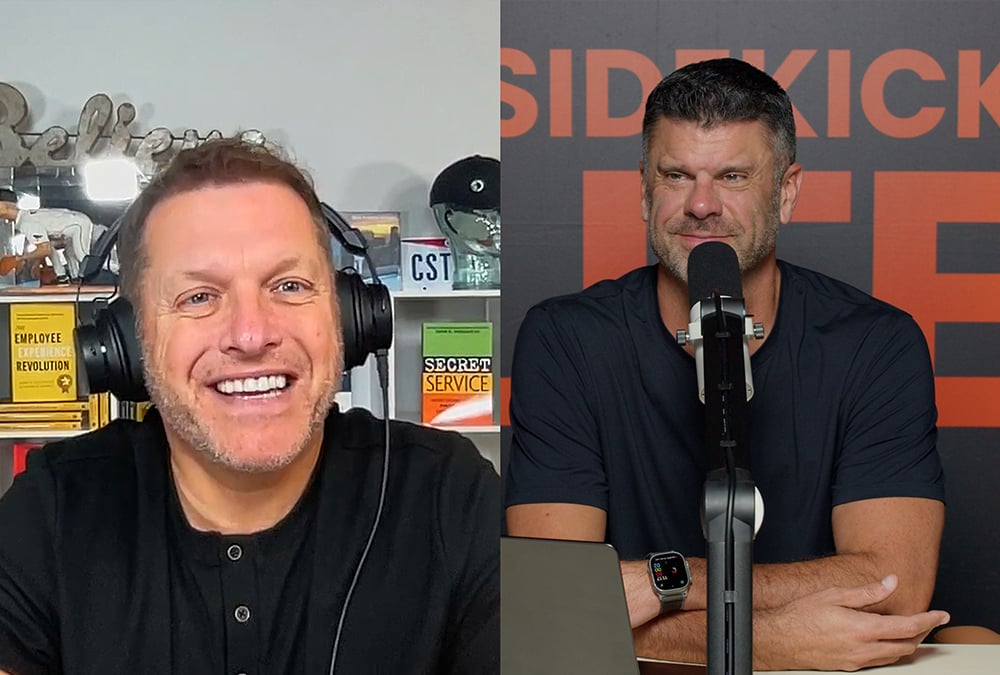
Most people don't set out to become the guy Starbucks and the Ritz-Carlton call when they want to fix their customer experience. John DiJulius didn't either. He just refused to compete on price.
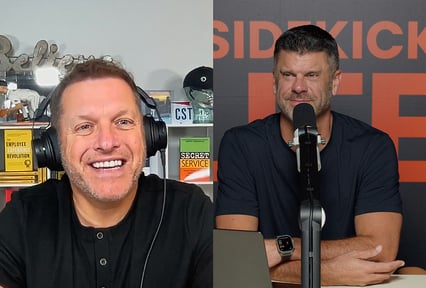
On this episode of "The Sidekick Life," Ryan and Tyler welcomed John DiJulius, III, founder of The DiJulius Group and the guy behind the philosophy that "price is irrelevant" when the experience is good enough. Long before he was consulting for Chick-fil-A, Starbucks, Alcon, Nestlé, PwC and Lexus, John was cutting hair in a 900-square-foot salon with three chairs, no employees and no customers.
Key takeaways
- You don't have to out-advertise or out-spend your competitors, you can out-experience them.
- Your real competition isn't the business down the street, it's everything else pulling at your customer's day.
- Differentiation through customer experience can work even in the most saturated, commoditized industries.
- Sometimes the biggest career pivots happen by accident, not by plan.
- A single book or body of work can completely redefine what your business becomes.
- The best endorsement is a room full of local business owners asking to hire you.
No money, no customers, no employees
Roughly 34 years ago, John and his wife opened a small hair salon in Cleveland. Four chairs. 900 square feet. And what John calls "the three nos."
"We had the three nos. No money, no customers, no employees," John said, describing the earliest days of what would become John Robert's Salon.
The problem wasn't just starting from scratch, it was starting from scratch in an industry with almost zero differentiation. As John put it, the hair salon business was so saturated that you could throw a ball in any direction and hit ten other salons doing the exact same thing. With no way to out-spend or out-advertise the competition, John and his wife made a decision that would define the next three decades: they'd win on experience instead.
Redefining who your real competition is
This is where John's philosophy gets interesting, and it's the piece that made him a sought-after voice well beyond the salon industry.
Most business owners assume their competition is the shop across the street. John argued that's the wrong frame entirely. If a guest has a great experience at John Robert's Salon, she's not walking out the door thinking about the competitor down the block.
"Your wife is running errands, she's meeting a friend for lunch, she's got a doctor's appointment, she's going shopping," John said. "That's what we're competing with."
The goal became creating what John describes as the "John Roberts hangover," an experience so good that everywhere the guest went for the rest of her day felt like a letdown by comparison. It's a subtle but powerful shift: instead of benchmarking against direct competitors, John built a business that benchmarked against a customer's entire day.
Accidentally becoming the authority on customer experience
John didn't set out to become a consultant or a keynote speaker. As the salon grew and gained a local reputation in Cleveland, business owners started asking him to speak at chambers of commerce and local events. He said yes mostly because he figured it was good marketing for the salon.
What happened next surprised him. After his talks, other entrepreneurs would approach him wanting to bring him into their own businesses, and they'd start asking about fees.
"I had no idea what they were talking about," John said, admitting he wasn't even sure whether he was supposed to pay them or the other way around.
That confusion turned into momentum. His speaking engagements grew, his audiences broadened across industries, and in 2003 he published his first book, "Secret Service." That single project became the turning point of his career.
"That took me from a salon owner that spoke a little bit to a speaker that owned a salon," John said.
From local salon owner to go-to guy for global brands
Once "Secret Service" hit shelves, John's world shifted fast. He hasn't been involved in the day-to-day of his salons since, but the company he built around his customer service philosophy, The DiJulius Group, started attracting a very different caliber of client: Chick-fil-A, Starbucks, Alcon, Nestlé, PwC, the Ritz-Carlton and Lexus among them.
For a guy who once wasn't sure if he owed local business owners money for showing up to their meetings, working with some of the biggest brands in the world was a wake-up call.
"I'm not in Kansas anymore," John said. "I'm learning more from them than I'm probably teaching them."
It's a full-circle moment that captures what makes John's story worth paying attention to: a salon owner with no money, no customers and no employees built a philosophy so effective that the world's most recognizable brands now come to him for advice.
Ready for more episodes?
If John's journey from a four-chair salon to advising Fortune 500 brands has you thinking differently about what customer experience can do for your business, there's more where this came from.
"The Sidekick Life" is packed with conversations just like this one, real talk, expert guests and practical insights for entrepreneurs at every stage of the journey.
Subscribe to our YouTube channel and stream new episodes every other week on Apple Podcasts and Spotify and never miss the conversation that might just change everything.