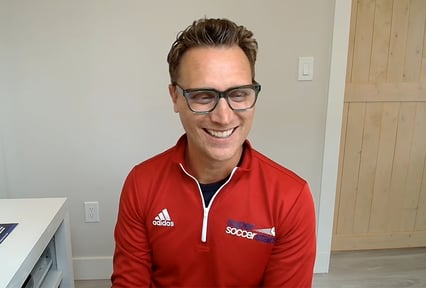
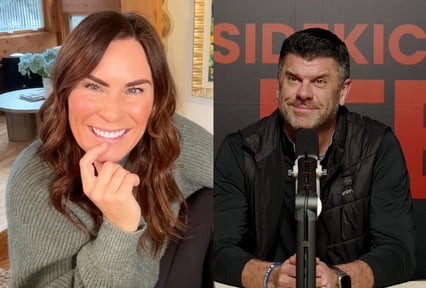
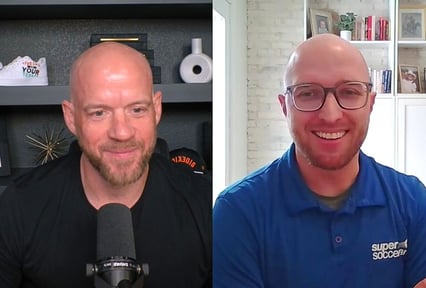
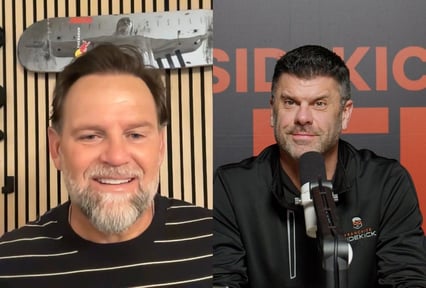
Adam Geisler, co-founder of Youth Athletes United, breaks down how he acquired three youth sports brands, scaled to 400+ locations.

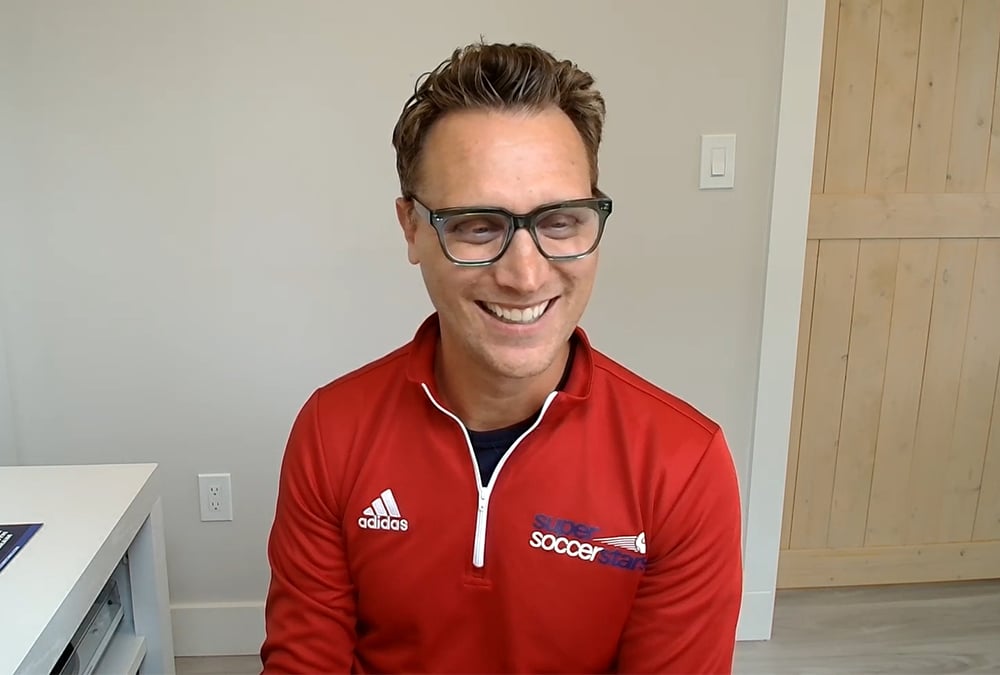
Some founders start with a blank page. Adam Geisler, co-founder and CEO of Youth Athletes United, started with two decades of sporting goods licensing experience, a decade-long habit of intentional networking and the conviction that he could take something good and make it great.
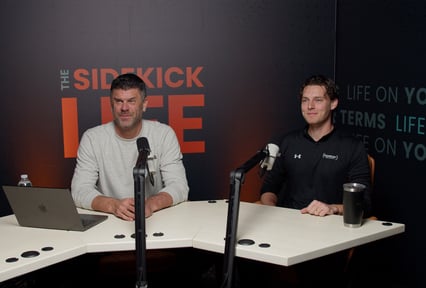
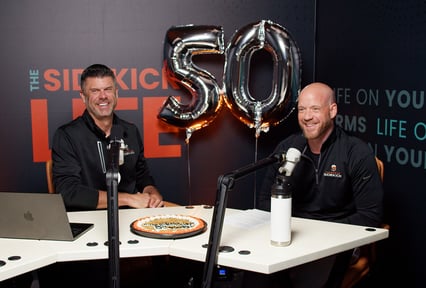
On this episode of "The Sidekick Life," Ryan and Tyler sat down with Adam to unpack how he and his partners acquired three youth sports brands, scaled them into a 400-plus location franchise empire reaching nearly half a million kids and recently brought in a private equity partner to fund the next chapter. Adam doesn't call himself a founder. He calls himself an acquisition entrepreneur, and his story is a masterclass in what's possible when relentless networking, operational discipline and a clear sense of purpose collide.
Key takeaways
- You don't have to found a brand to grow. "Acquisition entrepreneurs" can take a good concept and scale it with the right team and capital behind it.
- Years of unglamorous networking, one coffee or one lunch at a time, can lead to the relationship that changes everything.
- Change nothing, improve everything: learn a business inside and out before you put your fingerprints on it.
- Build a franchisee-first culture around accountability and accessibility, and the results will show up in your satisfaction scores.
- Growth capital isn't an exit, it's an outcome. Know your EBITDA threshold and your "why" before you bring in a partner.
- A transparent Item 19 and accessible leadership are the best filters for evaluating any franchise opportunity.
- Passion funds patience. The money follows the mission, not the other way around.
An acquisition entrepreneur’s path to success
Before Youth Athletes United existed, Adam spent two decades in sporting goods licensing, including stops at Everlast and Authentic Brands Group, the second-largest licensing company in the world. Along the way, he figured out exactly what kind of operator he is.
"What I know about myself and my partner is that we're actually acquisition entrepreneurs," Adam said. "Somebody who has founded something from dollar zero has a different level of intestinal fortitude than myself or my partners. We really knew how to take something that was really great and make it great."
That philosophy traces back to a habit Adam built fifteen years before he ever bought a franchise brand: setting aside time every year just to network.
"I would take two months out of my life every single year just to spend time networking with people," Adam said.
One of those relationships led to investor Blake Gower, and the connection ran for years before it turned into anything. Adam spent the first five years simply showing up, asking questions and learning. Only in year six did he start pitching ideas, and his first ten pitches missed.
"I probably gave them 10 really bad ideas," Adam said. "The 11th happened to be the good one."
His last idea became Soccer Stars, and the opportunity surfaced almost by accident. Adam's future CTO was in a job interview with a different company when he overheard that Soccer Stars was for sale. Within a week he had three partners lined up and a private equity group ready to invest alongside them.
Building the youth sports platform with Soccer Stars, Amazing Athletes and TGA
A few years after that first acquisition, Adam and his partners added Amazing Athletes, then TGA (tennis, golf and pickleball), stitching all three into a single multi-brand youth sports franchise platform.
Each brand has its own lane. Soccer Stars teaches mobile, class-based soccer sessions to kids as young as one, all the way up to age twelve. Amazing Athletes introduces ten different sports to build physical literacy and confidence before kids specialize. And TGA picks up where the first two leave off, running sport-specific classes in tennis, golf and pickleball. All three are delivered at schools, parks and rec centers close to the customer, and were built around one shared promise.
"If a parent comes in and starts in one of the brands, we want them to know that they can the same product quality across all three brands," Adam said.
That consistency has turned into something franchisees actively buy into. Instead of only adding new territories, a growing share of YAU's owners are stacking brands inside the same market.
"Thirty percent of our owners own multiple brands," Adam said. "You guys have seen franchise platforms. It's easier said than done. That's what we've really built in this business ... but to watch franchisees be successful running multiple brands in one territory, it's just more impact and just makes the business easier to do more of what they love."
Why accountability builds trust in franchising
Adam is adamant that his role as CEO stays forward-facing, not hidden behind a layer of franchise development staff.
"We won't ask you to do anything we won't do ourselves," Adam said. "I'm available to every franchisee, talk to every franchisee. I wanted to be very forward-facing."
Every franchisee has his cell phone number. Every candidate meets the CEO and the president before signing. It's a habit that shows up in the numbers, too. Adam is proud that franchise leadership and vision consistently rank among the strongest categories in YAU's franchisee satisfaction surveys.
That same intensity showed up on day one. Adam still remembers the very first confirmation day for Soccer Stars, a single candidate couple in Pennsylvania and a presentation the team built like it was for a room of a hundred.
"It was like an 80-page deck," Adam said. "It was way too exhausting, but we wanted to overdeliver and make sure they felt so great that they were gonna be the brand ambassadors for us as we went."
The next confirmation day had four candidates. The one after that had twelve. Momentum built the same way the business itself has grown since: one franchisee, one location, one relationship at a time.
The 16-month process and bringing in capital partners
COVID forced a reckoning for a lot of franchise operators, but for Adam and his partners it became the turning point that pushed them toward franchising at scale in the first place. Years of steady growth followed, and eventually the team hit the kind of EBITDA threshold that made their original investors start a new conversation.
"We're not building for an exit, we're building for an outcome," Adam said, describing how his first capital partners framed success from day one.
When YAU outgrew what that partnership could fund, the group agreed it was time to find growth capital elsewhere.
What followed was a 16-month process working with investment bank Box Partners to find the right partner. Adam and his team treated every single meeting, no matter how small, as a chance to get sharper.
"We took every single meeting," Adam said. "We used every single opportunity to learn. Learn something about ourselves, learn something about our business."
That discipline extended to logistics most founders would resent: dense diligence questionnaires that routinely landed the night before a 10 a.m. presentation. Adam's team answered every one of them in a prepared deck rather than scrambling.
"We set the standard of excellence in every single meeting of how we want our business to run and how we want people to treat us," Adam said.
The process ultimately led YAU to Furious Capital Partners, a partner Adam says shares the company's values and culture. Notably, YAU's existing investors stayed hands-off and let the founding team run the entire search themselves.
"They gave us that opportunity, and we earned it," Adam said. "We didn't have to say no, we just said yes to the people that we wanted to be with."
What’s next for Youth Athletes United?
YAU has grown from roughly $25 million in system-wide revenue and 80 owners at acquisition to more than $65 million in revenue, 200-plus owners and 400-plus locations today, reaching nearly half a million kids. But Adam measures success differently than revenue alone.
"The goal is kid impact," Adam said. "If you've got two hundred owners today ... it's not necessarily doubling the owner count because that would mean that your owners aren't making enough money. It's how to get more multi-brand owners? How do they really scale?"
That means the next phase of growth is as much about AUVs and franchisee profitability as it is about unit count, with the door open to new concepts, like coding or STEM programs, if they fit the platform's mission and help franchisees scale.
Personally, Adam has no plans to slow down. He turned 50 the day before this conversation.
"This is no longer a job," Adam said. "This is my vision, my mission, my passion. I love what I do every day."
Adam’s advice for aspiring franchisees
When Tyler asked Adam what he tells people who are considering franchise ownership, he didn't hesitate: start with the paperwork and start with the people.
"If a franchisor does not have an Item 19, that is your financial playbook to understand what's positive and negative, and let it be your source of truth," Adam said.
He's just as direct about leadership access. A prospective franchisee should be able to meet the founders and CEO directly, not just a franchise development rep.
"Be inspired by the franchisor," Adam said. "If they put you to sleep ... they're just not passionate about what they do."
And once someone does sign on, Adam is clear-eyed about the commitment it takes.
"Full-time effort, full-time results. Part-time effort, part-time results," Adam said.
He's seen plenty of owners try to outsource the sales role or hire a general manager on day one, and he cautions that this business rewards pride of ownership, not passive investment.
Ready for more episodes?
If Adam's story has you thinking about what's possible in franchise ownership, we've got what you're looking for. Schedule a free, 10-minute call with an advisor to start your business ownership journey.
"The Sidekick Life" is packed with conversations just like this one, real talk, expert guests and practical insights for entrepreneurs at every stage of the journey.
Subscribe to our YouTube channel and stream new episodes every other week on Apple Podcasts and Spotify and never miss the conversation that might just change everything.