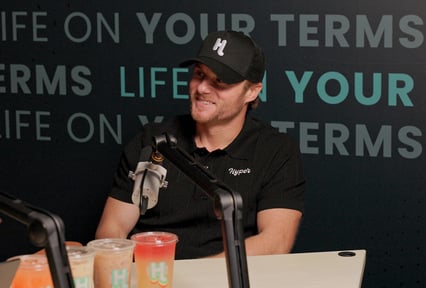
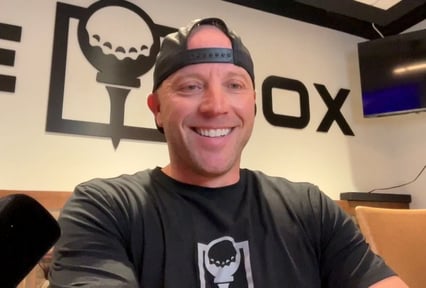
Chris Whalen, founder of Hyper Energy Bar, shares how he and his wife built a 19-unit energy drink brand on hospitality, culture and patience.

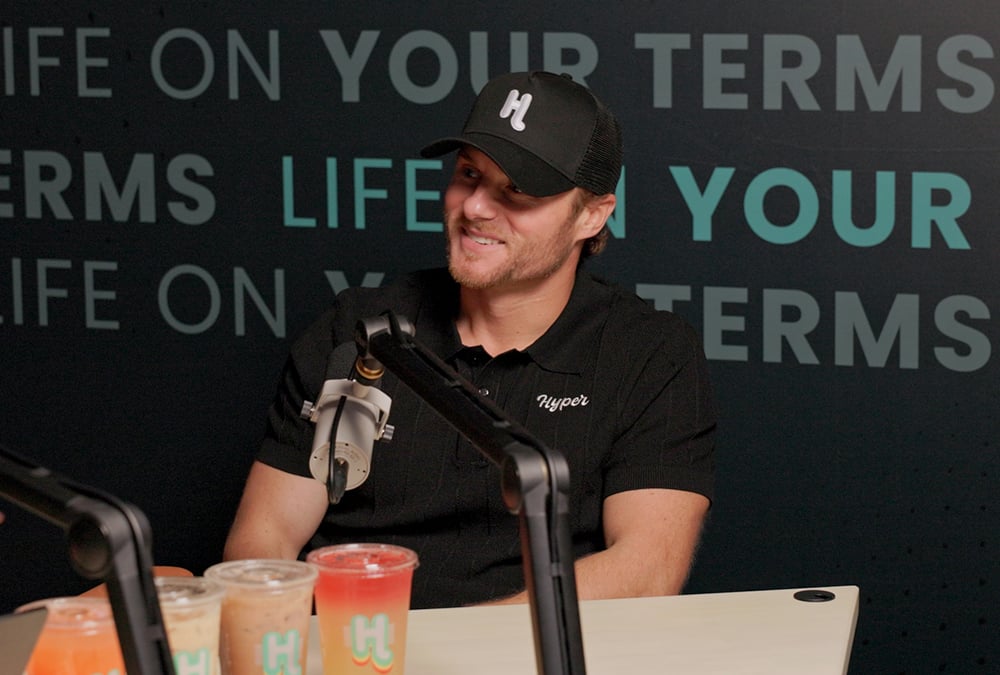
Most founders chase a trend. Chris Whalen built one out of a family recipe for hospitality, a plywood conference table and the stubborn belief that speed and connection don't have to be opposites.
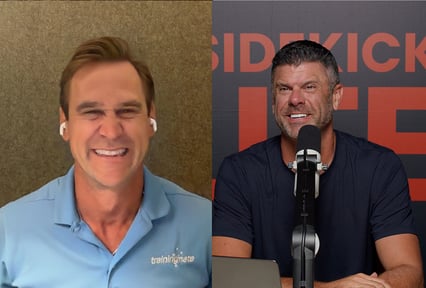
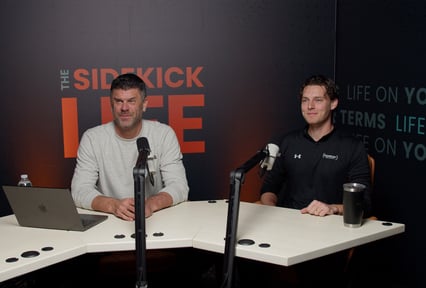
On this episode of "The Sidekick Life," Chris sat down with Ryan to talk about how he and his wife, Izzy, turned Hyper Energy Bar from a single drive-thru in Waukee, Iowa into a 19-unit, multi-state brand in just four years, and why he's in no hurry to franchise it.
Key takeaways
- Get your "B version" out the door. Perfection is a myth, and the real lessons only show up once customers are in front of you.
- Prove the model locally before you take it multi-state. Name recognition and operational muscle both have to be earned first.
- Hire for the business you want in three years, not the one you have today.
- A brand's personality has to come from the real people building it, or it won't hold up at scale.
- Trust your team, but build in real accountability and feedback loops.
- Corporate-owned vs. franchise isn't a right-or-wrong call. It's about knowing whether you're an operator or an operator-turned-franchisor.
- Growth that lasts comes from real relationships with your earliest customers, not just marketing spend.
- Play the long game. Repeatable, unglamorous effort over years is nearly impossible to outcompete.
Hospitality was the family business
Chris didn't stumble into hospitality, he was raised on it. His father was finishing law school when his grandfather handed him a rundown building in Davenport, Iowa, and a challenge: help turn it into something. That something became the Machine Shed, now one of the highest-volume restaurants in the state, and the start of a family portfolio that grew into restaurants, hotels and co-located brands, all built and run in-house.
"Hospitality is just in my blood," Chris said, reflecting on growing up in the business, working different roles across the family's restaurants and hotels.
That foundation gave him something most first-time founders don't have: a head start on knowing what great hospitality actually looks like, and the freedom to focus on operations, quality and people instead of untangling the basics from scratch.
It started on a plywood table
Hyper launched in 2021 in Waukee, a suburb of Des Moines, out of an old cabinet warehouse. The first conference table wasn't a table at all. It was a wheeled parts cart with a couple sheets of plywood thrown on top, and it stayed that way for two years.
"This needs to be a ground-up, it needs to be a startup in the truest sense," Chris said. "Nothing can be contrived or corporatized on this. It has to come from us and the people that are in this brand."
That same get-your-hands-dirty mindset shaped how Hyper actually opened its doors. Chris spent seven days a week in the window making drinks himself, even while his team built out the systems behind the scenes.
"You don't know what you don't know until you open the doors," Chris said.
Since day one, Hyper has swapped technology providers, rewritten recipes and changed nearly every vendor relationship it started with. None of it was wasted motion. It was the price of learning the business from the inside instead of guessing from a boardroom.
It's a version of a philosophy a lot of operators preach but few actually live: get your B version out into the world, let the real feedback come in and let it grow into the A. Chris didn't wait for perfect. He built in public, learned in public and the brand got sharper with every rep.
Why Hyper stayed in Iowa before growing into multiple states
Hyper didn't leap into expansion mode the moment the first drive-thru took off. Chris and Izzy spent roughly three to four years building depth in their home market before crossing a state line, opening a second location while the first was still under construction, then steadily filling in the metro around Des Moines.
"We believe in scale, and that scale matters," Chris said. "Not only from the opportunity, but your name recognition. It was going to build the overall business and raise the boats."
But scale for scale's sake was never the goal. Hyper has 19 locations today, with more under construction, not 190, and that was intentional.
"We weren't going to open 10 in a year," Chris said. "There is so much, even as somebody who's a fairly seasoned operator, there's so many kinks you learn in those first years."
Only after the metro was humming did Hyper cross into Nebraska and Kansas, opening its first Nebraska location in Grand Island before expanding into bigger cities. Multi-state growth, Chris admits, is still a live experiment. Some things are hitting the way he hoped. Some aren't, yet. But the patience that built the first few units is the same patience guiding the next phase.
Hire for the business you’re building, not the one you have
Ask Chris what actually determines whether a brand can scale, and he won't point to funding or real estate first. He points to people.
"I think you gotta hire for what you expect your next couple years to look like," Chris said. "If you're at five units and you want to go to 10 units, don't hire the person for 10 units. Hire the person for 30 units."
That approach came from hard-won experience. Hyper went through growth phases before the team was ready, not because the brand or the systems were broken, but because the people side hadn't caught up yet. Chris describes it almost physically: when a jump in scale makes his gut twist, that's the signal something on the people side needs to change.
He's also candid that he doesn't have a formula for spotting the right hires in advance. What he does have is a track record: nearly every person on his core team was promoted up through operations, tested in real circumstances and proven over years before they ever touched a leadership seat.
"Trust but verify," Chris said.
He holds his team to clear goals, but he's honest that the anxiety of scaling never fully goes away.
"You're not a true entrepreneur if you're sleeping a full eight."
Corporate-owned vs. franchise – and why Hyper hasn’t made the leap
Chris isn't new to franchising. His family has operated as both a long-term hotel franchisee and a franchisor on the restaurant side, so he's seen both models up close. For now, Hyper is staying 100% corporate-owned, and that's a deliberate choice, not a default.
"I think we either operate them, or you're a franchisee, or you're a franchisor," Chris said. "I know people who play in both sides, and I don't think it's terribly effective."
He estimates Hyper fields around 100 serious franchise inquiries a week. The interest is there. But Chris wants the brand's systems, culture and unit economics ironed out before he'd ever consider handing the keys to franchisees.
"I'm not done being an operator," Chris said, echoing an analogy his father used for the family business: a train set he simply isn't done building yet.
It's a useful reminder for anyone eyeing franchising as the default path to scale. Corporate growth and franchised growth are both legitimate strategies, but trying to run both at once, or jumping into franchising before the brand is ready, tends to dilute both.
Navigating the beverage wars
Energy drinks, dirty sodas, craft coffee, drive-thru kiosks … the convenient-drink category is crowded and growing fast. Chris has heard it called the "beverage wars," and he doesn't flinch at the label.
"I've just never been a zero sum game type guy," Chris said. "I think there's a lot of room in the sandbox for everybody."
What's changed, in his view, is consumer appetite. Shelf space at a gas station today dwarfs what it looked like even a decade ago, and customers increasingly want options that feel personal, not mass-produced.
"I'm a beverage guy," Chris said. "Anybody who knows me knows I'm pretty OCD, I'm always drinking something, always trying something."
That personal obsession, paired with hospitality roots instead of a purely transactional drive-thru model, is what Chris believes sets Hyper apart from the bigger, more established players in the space.
Chris’ advice for anyone thinking about jumping into business ownership
When the conversation turned to people still sitting on the sidelines of entrepreneurship, Chris didn't soften his answer.
"The best advice I ever got was jump in," he said. "Not try it, go all the way in. And you'll never know if you don't."
Growing up around entrepreneurs gave him a head start most people don't get. But even with that exposure, he says the only real way through is to act, not to wait until the conditions feel perfect.
And when asked what separates founders who make it from those who don't, Chris pointed to something simple and unglamorous: consistency over time.
"If you just press hard, repeatedly and have serious dedication, it's almost impossible to lose," Chris said. "The odds are in your favor if you play long enough."
It's advice that echoes through everything else Chris shared on this episode. The plywood table, the years spent proving the model locally, the patience to hire ahead of where the business is today. None of it is flashy. All of it compounds.
Interested in getting involved in Hyper?
Hyper isn't franchising yet, but Chris and Izzy are engaged online and love hearing from their community directly.
Find Hyper Energy Bar on Instagram and connect with Chris on LinkedIn. If there's not a location near you yet, don't be surprised if one shows up soon, Hyper has its sights set on 15 to 20 states over the next decade.
Ready for more episodes?
If Chris's story has you thinking differently about what it takes to build a beverage brand, or any brand, from the ground up, we've got more where this came from.
"The Sidekick Life" is packed with conversations just like this one, real talk, expert guests and practical insights for entrepreneurs at every stage of the journey.
Subscribe to our YouTube channel and stream new episodes every other week on Apple Podcasts and Spotify and never miss the conversation that might just change everything.